Let’s Talk Health and Care
This podcast series is linked to the Integrated Care Academy at UWE Bristol and covers various topics associated with workforce development, applied research with impact, health technology and positive societal change. Building relationships and being an interface between people, technology, education, research, culture and health care are core elements of the Integrated Care Academy at UWE Bristol.
http://uwe.ac.uk/integrated-care-academy
Contact us: ica@uwe.ac.uk
Listen on:



Episodes

Aug 20, 2026
Aug 20, 2026
39 min
In this episode, Dr Peter Brindle is joined by Olivia Crossing and Annie Taylor, both experienced NHS nurses and co-founders of RateMyShift, an award-winning digital platform that gives NHS staff a real-time voice about their working day.
RateMyShift is a continuous feedback platform designed to prompt meaningful conversations between line managers and colleagues in real-time. Starting life as a box of smiley faces on a staff notice board, it evolved into an Excel spreadsheet and a QI project, and then into the digital communication platform it is today. Built for healthcare staff, by healthcare staff, it is a tool that can be used to identify problems early within a health and care setting, to stop them from developing into bigger, unresolved problems in the future.
We explore RateMyShift's origins and evolution, and Annie and Olivia's dynamic together as co-founders. We talk about how hierarchy creates communication gaps that managers may not even be aware of, and also of the crucial role of coaching in helping managers turn data into change. Underpinning all of it is a simple concept that staff who feel heard and valued are better able to give patients the care they deserve. RateMyShift sits in the gap between intent and improved experience.
Find out more about RateMyShift: https://www.ratemyshift.app/
Stay healthy and take care!

Apr 10, 2026
Apr 10, 2026
1 hr 1 min
Rebuilding Identity: Inside the Bristol 3D Medical Centre with Lead Reconstructive Scientist Amy Davey
Imagine losing part of your face, your smile, or even your identity and then meeting a team who can help you rebuild it. In this remarkable on‑site episode, hosts Marc Griffiths and Peter Brindle take listeners inside the groundbreaking Bristol 3D Medical Centre, the first NHS facility in the UK to bring 3D scanning, digital modelling and 3D printing together under one roof to transform patient rehabilitation.
Our guest, Amy Davey, Lead Reconstructive Scientist and Lab Manager, guides us through the full journey: from ultra‑precise facial scanning to digital sculpting, from high‑tech resin and PEEK printing to the traditional hand‑crafting of prosthetics even down to the Singer sewing machine used to tailor bespoke silicone garments.
More than a technological deep dive, this episode explores the emotional and therapeutic dimensions of reconstruction. Amy shares powerful patient stories, including individuals rebuilding confidence after cancer treatment, trauma, or congenital differences, and reveals how a prosthesis can do far more than restore appearance it can help restore confidence and someone’s identity.
Along the way we discuss:
How the Centre supports patients from infancy to older age
The fusion of artistry, engineering and clinical care in modern prosthetics
The evolution and future of 3D‑printed medical devices in the NHS
The vital psychological aspects of appearance, identity and rehabilitation
The Centre’s growing partnerships with universities and robotics researchers
What ‘brilliant’ looks like for the next five years of innovation
This is an inspiring and empowering episode that showcases innovation in practice, delivered with compassion. A must‑listen for anyone interested in health, technology, engineering, patient experience, or the future of personalised medicine.
To learn more about the Bristol 3D Medical Centre and explore examples of their work, follow the link in the episode description.
https://www.nbt.nhs.uk/our-services/a-z-services/reconstructive-prosthetics/bristol-3d-medical-centre

Mar 5, 2026
Mar 5, 2026
44 min
In this episode of Let’s Talk Health and Care, Marc Griffiths and Peter Brindle explore the hidden complexities of the blood supply chain and the radical innovations that could transform it.
Our guests in this episode, Professor Wendy Phillips, Dean for Research and Enterprise, and Dr Helen Sanderson, Senior Research Fellow, both from the College of Business and Law at UWE Bristol, share insights drawn from a decade of pioneering research into redistributed manufacturing and next‑generation blood products.
Together, they discuss:
Why the blood supply chain is far more vulnerable and complex than most people realise
Their work to address battlefield blood supply challenges
Emerging innovations including walk‑in blood banks, freeze‑dried plasma, and lab‑grown red blood cells
Ethical and cultural questions around artificial versus donated blood
How military‑driven innovation could strengthen resilience across the NHS and civilian healthcare
What the next 5–10 years could look like as technology reshapes how and where we manufacture blood
This episode offers a fascinating look at the future of life‑saving care, from regulation to innovation pipelines to the possibility of “better‑than‑natural” blood.
The Redistributed Manufacturing in Healthcare Network: www.RiHN.org.uk

Dec 12, 2025
Dec 12, 2025
52 min
In this powerful episode of Let’s Talk Health and Care, Marc Griffiths and Peter Brindle take listeners inside Empire Fighting Chance, a Bristol-based organisation transforming the lives of young people who have been, in their own words, 'knocked down by life'. Through boxing-inspired therapy, culturally competent support, and deep community connection, Empire Fighting Chance is reshaping how we think about mental health, violence prevention and youth engagement.
Marc and Peter speak with Co-Founder Martin Bisp, Mariella and Elaine who share the origins of their unique model, the evidence behind their impact, and what traditional services can learn from meeting young people where they truly are. Together, they explore the challenges of working with young people affected by trauma, the urgent need for systemic change, including calls for an Office of Violence Prevention and the importance of empowering local communities rather than replicating top-down interventions.
Listeners will also hear from a box therapist, who brings to life what therapy looks like in the gym environment, and a young person turned staff member, who shares their journey through adversity and how this approach helped them rewrite their story.
Marc and Peter close this episode with some reflections on what health and care professionals can take from the Empire model: the value of culturally relevant support, the power of safe non-clinical spaces, and the need to be braver in commissioning innovative approaches for those who need them most.
A compelling episode that challenges assumptions, highlights community-led innovation, and offers a hopeful look at what’s possible when we design services with young people, not for them.
Links:
Empire Fighting Chance
Uncovered: Identity-Based Mass Violence in Urban Contexts | IBMV

Nov 18, 2025
Nov 18, 2025
44 min
In this special reflective episode, hosts Dr Peter Brindle and Professor Marc Griffiths look back over a remarkable year of Let’s Talk Health and Care, exploring the themes, insights, and powerful human stories uncovered across 10 episodes and 15 inspiring guests.
From 3D-printed food and smart socks to social enterprise, restorative justice, and community-led health innovation, this episode weaves together the key patterns that have emerged across conversations, technology with purpose, research with impact, and people at the heart of everything.

Oct 22, 2025
Oct 22, 2025
39 min
In this episode, we are on location at the For All Health Living Centre in Weston-Super-Mare with Mark Graham (CEO of the For All Healthy Living Centre) and Joanne Poole (Director of Nursing at Weston General Hospital)*
We explore how partnerships between hospitals and communities are redefining what care really means and discuss the mission to move healthcare beyond hospital walls and closer to where people live their lives.
Unpacking themes of trust, prevention, and collaboration, highlighting how local relationships and new ways of working can transform health outcomes are all explored. From 'tribal mapping' to re-imagining the workforce of the future, this episode shines a light on how small communities can lead big system change.
*At the time of recording this episode, Joanna Poole was working at Weston General Hospital. Joanne is currently on a secondment to Somerset NHS Foundation Trust as the Assistant Chief Nurse.
https://www.forallhlc.org/

Sep 18, 2025
Sep 18, 2025
1 hr 11 min
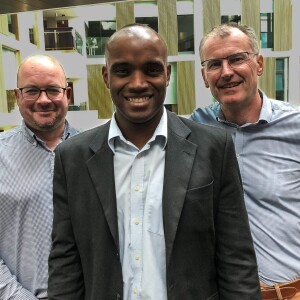
In this episode we speak with three entrepreneurs and our focus is on innovation in health technology.
We are joined by Professor Matt Freeman, who is the Centre Director at Future_Space, which is an innovation centre that has become the gold standard for university-industry collaboration. Future_ Space at UWE Bristol is a multi-award-winning innovation centre designed for pioneering high-tech high-growth businesses solving tomorrow's biggest challenges.
We are also joined by Dr Jenny Bailey Cooper, CEO and co-founder of Ferryx, a university spin-out company developing innovative gut health solutions and Dr Zeke Steer, founder of Milbotix, has developed smart sock technology that's turning this everyday garment into a powerful health monitoring tool.
Links:
https://www.futurespacebristol.co.uk/
www.ferryx.com
https://milbotix.com/
Jun 15, 2025
Jun 15, 2025
35 min
In this latest episode, we are joined by Dr Appolinaire Etoundi, Senior Lecturer and Researcher in Mechatronics at UWE Bristol. From pioneering low-cost prosthetic legs to developing AI-driven assistive devices, Appolinaire is reshaping how technology intersects with healthcare and his vision to create a centre that uses AI, 3D scanning and printing to tailor affordable prosthetics in real time is captivating.
The driving force for the vision is entirely user-centred - a career shift motivated by being challenged by a gold medal winning Para Olympian to consider making joints for people rather than robots... His mission is to design technology that empowers and not excludes.
Interesting fact: The temperature in a prosthetic leg socket can reach 47-49 Celsius after 90 minutes of walking! There is so much to be done to improve this and many other aspects of living with prosthetics.
Useful links:
Appolinaire’s university profile: https://people.uwe.ac.uk/Person/AppolinaireEtoundi
Cybathlon 2024: https://www.youtube.com/watch?v=DLbl2Q1xGuA
Bristol Centre for Enablement: https://www.nbt.nhs.uk/bristol-centre-enablement
Selected publications:
Bio-Inspired Knee Joint: Trends in the Hardware Systems Development https://www.frontiersin.org/journals/robotics-and-ai/articles/10.3389/frobt.2021.613574/full
Experimental Verification of Kinematics and Kinetics in a Biomimetic Bipedal Robot https://asmedigitalcollection.asme.org/mechanismsrobotics/article/15/1/014503/1140488/Experimental-Verification-of-Kinematics-and
The Anthro-Thumb: a biomimetic hybrid soft robotic carpometacarpal saddle joint for the thumb, Frontiers in Robotics and AI https://www.frontiersin.org/journals/robotics-and-ai/articles/10.3389/frobt.2025.1496073/full

May 13, 2025
May 13, 2025
45 min
In this episode, we are joined by Professor Kieran McCartan, Professor of Criminology here at UWE Bristol, and an expert in applying public health strategies. Our focus in this episode is exploring a subject that is as challenging as it is crucial: the prevention of child sex abuse. Child sex abuse affects more children than most people realise and highlighting the urgent need for effective prevention strategies is the focus of this episode.
Trigger warning: This podcast episode mentions the sexual abuse of children in the context of how we work together to prevent it. It affects all communities, 1 in 5 girls and 1 in 7 boys worldwide. Talking about child sexual abuse is important and part of the solution. If listening to the podcast has affected you and speaking to someone would help or if you simply want to learn more, the NSPCC website is a good place to start, please go to www.nspcc.org.uk/
Wider resources related to this podcast episode:
Journal articles:
McCartan, K. F., & King-Hill, S. (2024). Developing a Framework for the Prevention of Sibling Sexual Behaviour. Child Abuse & Neglect https://doi.org/10.1016/j.chiabu.2024.106849
McCartan, K., & Kemshall, H. (2023). Incorporating Quaternary Prevention: Understanding the Full Scope of Public Health Practices in Sexual Abuse Prevention. International Journal of Offender Therapy and Comparative Criminology, 67(2-3), 224-246. https://doi.org/10.1177/0306624X211049204
McCartan, K. F., & Richards, K. (2020). The Integration of People Convicted of a Sexual Offence Into the Community and Their (Risk) Management. Current Psychiatric Reports. 23, 52. https://doi.org/10.1007/s11920-021-01258-4
Books:
McCartan, K. F., Eason, A., Senker, S., Adiss, N., &Porter, C. (in press, 2025). Developing an epicrim approach in working with people convicted of a sexual offence: prevention, treatment and integration. Palgrave Macmillan. (This is the new
King-Hill, S., McCartan, K. F., Gilsmann, A., Beavis, J., & Adams, A. (2023). Understanding and Responding to Sibling Sexual Abuse. Palgrave MacMillan.
Uzieblo, K., Smid, W., & McCartan, K. F (2022). Challenges in the Management of People Convicted of a Sexual Offence: A Way Forward. Palgrave MacMillan.
Reports:
McCartran, K. F. (2024). Scoping review of international approaches to child sexual abuse and exploitation prevention interventions by law enforcement. ECPAT International.
McCartan, K. F., Constant, S., & Beg, Z. (2023). Technical guidance on the development of registers for people convicted of a sexual offence. ECPAT
Senker, S., Eason, A., McCartan, K. F., & Pawson, C. (2023). Issues, challenges and opportunities for trauma-informed practice, HM Inspectorate of Probation.
Kemshall, H., & McCartan, K. F., (2022). Desistance, recovery, and justice capital: Putting it all together. HM Inspectorate of Probation.
McCartan, K. F. (2022). Adapting out thinking on theory and practice in working with people convicted of a sexual offence. HM Inspectorate of Probation. HM Inspectorate of Probation.
Podcasts:
Lets talk Forensic Psychology podcast (Oct, 2024) https://www.youtube.com/watch?v=CaE348X0BnU&t=876s
UWE Change makers on collaborative work on Child Sexual Abuse prevention with NSPCC Together For Childhood. https://soundcloud.com/uwebristol/changemaker-podcast-together-for-childhood?in=uwebristol/sets/changemaker-podcast
Interviewed for HMI Probation on 3 key pionts for probation focusing on trauma informed practice and recover captial. https://www.justiceinspectorates.gov.uk/hmiprobation/research/reflections-from-research/
Blogs
King-Hill, S., & McCartan, K. F. (2025). White Lotus: ‘the show’s depiction of sibling sexual behaviour is incredibly harmful’. The Conversation Uk, April. White Lotus: ‘the show’s depiction of sibling sexual behaviour is incredibly harmful’ – expert opinion
McCartan, K. F., & King-Hill, S. (2025). The use of TV drama ‘adolescence’ in schools: why simple solutions to complex problems don’t work. UWE Research and Enterprise Blog, April. https://blogs.uwe.ac.uk/research-external-engagement/the-use-of-tv-drama-adolescence-in-schools-why-simple-solutions-to-complex-problems-dont-work/
King-Hill, S., & McCartan, K. F. (2024). Tackling and preventing inter-partner abuse in young people through evidence based relationships and sex education. The Conversation Uk, dec. Good sex and relationships education can help teens understand when behaviour is abusive or controlling
Association for the Treatment & Prevention of Sexual Abuse) https://blog.atsa.com/
Apr 17, 2025
Apr 17, 2025
30 min
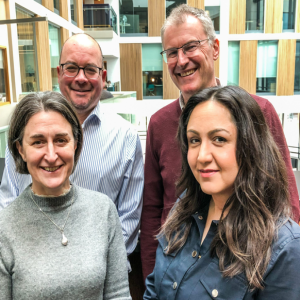
In this episode, we speak with two leading researchers,Professor Nikki Cotterill and Dr Bahareh Vahabi and the focus of this episode on the work to addressing continence issues through community-based solutions and digital tools and the science related to bladder disorders, include the devasting effect of ketamine and impact of Corona virus on the bladder.
Episode links –
CONfidence app: www.confidenceapp.uk
MSc Health Technology programme: https://courses.uwe.ac.uk/L5901/health-technology